
07 Nov Soggy Lawn on a Sloping Block? How to Know If Drain Pipe Is Leaking Before It Undermines Your Retaining Wall
There’s a particular patch of your property’s lawn that never quite dries out. You’ve probably blamed the shade, or the neighbour’s sprinkler, or the fact that it rained on Wednesday. On a flat block that explanation might hold up. On a sloping one, where the house sits up the hill and everything else steps down towards the street, a patch that stays damp through a dry fortnight is worth a second look. Water doesn’t appear out of nowhere, and on sloping ground it always ends up somewhere lower than where it started. Very often, the source is a leaking drain pipe buried a metre or so under your path.
Plenty of older homes on hillside blocks still drain through their original terracotta pipes, laid in short sections with mortar or rubber-ringed joints. Decades of tree roots, shifting soil and the weight of retaining walls loosen those joints, and every flush or shower sends a little wastewater into the ground instead of the sewer. On a slope, it doesn’t stay put. It tracks along the sandstone beneath the topsoil, pools behind walls and softens the ground under paving. Learning how to know if drain pipe is leaking early is far cheaper than finding out when a wall starts to lean. The clues are usually there for months beforehand. You just need to know where to look, and most people look in the wrong place.
How to Determine If A Drain Pipe Is Leaking Under Your Garden
Start below the house, not beside it. Because water runs downhill, the wet spot is often several metres lower than the actual break, so homeowners dig up the soggy patch and find nothing. Walk the line your pipes most likely follow, usually from the bathroom and laundry down towards the boundary, and note anywhere the grass is noticeably greener or lusher than the rest of the lawn. Wastewater carries nutrients, and the lawn will happily show you where it’s going. A faint sewage smell after the morning showers, or moss creeping across pavers that used to stay clean, tells the same story.
Then look at the hard surfaces. Pavers that have dropped or rock underfoot, a concrete path with a new crack running across it, or a gap opening up where the steps meet the house all suggest soil being washed away underneath. Retaining walls deserve the closest attention. Check the weep holes at the base. If they’re still trickling days after rain, or the face of the wall has white, chalky staining, there’s more water behind it than the drainage was designed for. A drain pipe leaking behind a wall adds weight and pressure that sandstone blocks and timber sleepers were never built to hold back, and a slight lean can become a collapse after one wet week.
You can run a simple test before calling anyone. Pick a dry stretch of weather, mark the edge of the damp patch with a few pegs, then run the shower and washing machine for half an hour. If the patch spreads or the weep holes start running, the source is almost certainly the drains rather than groundwater. A CCTV camera inspection will then show exactly which joint has failed, how deep it sits and what’s around it, which takes the guesswork out of any drain pipe leak repair.
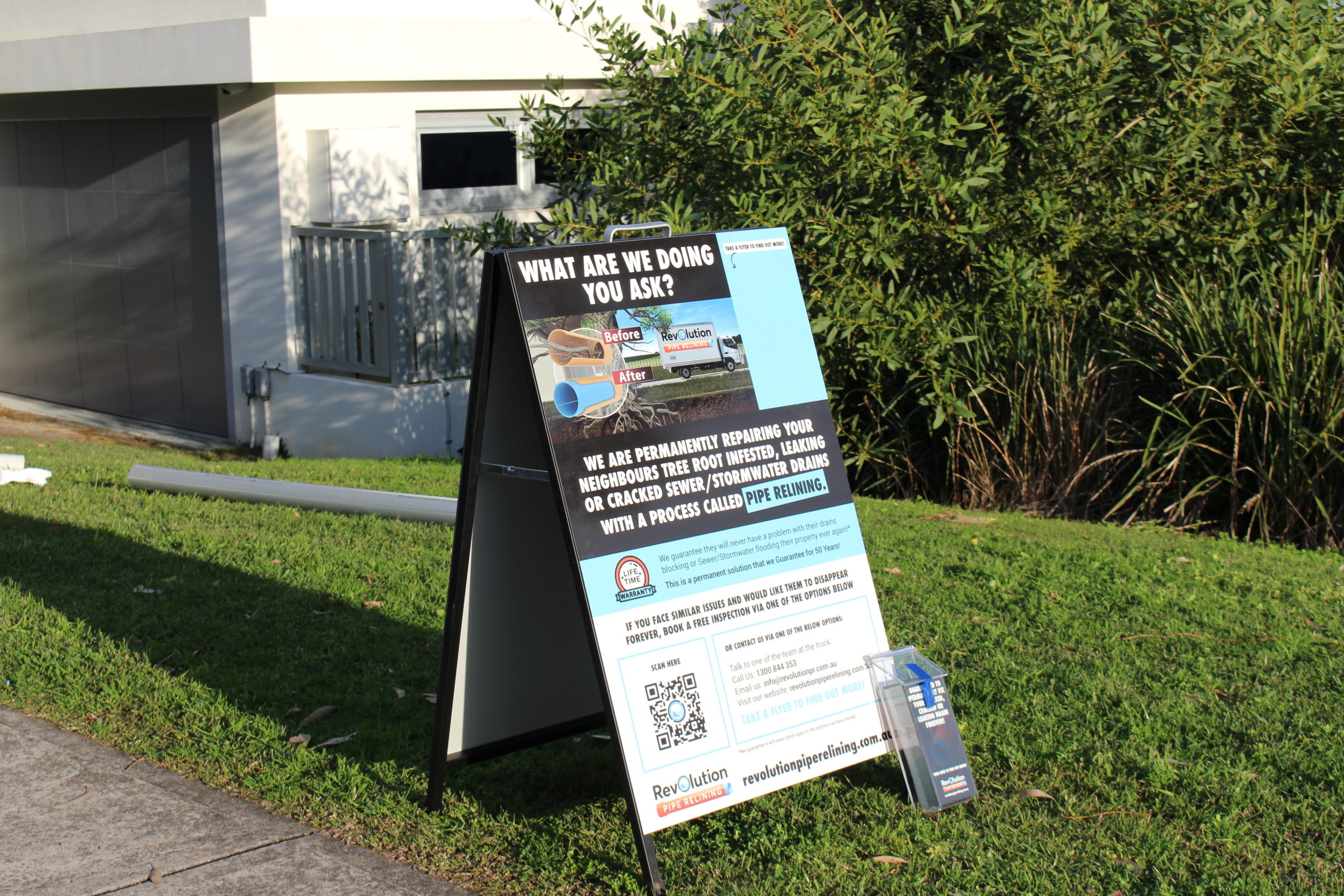
That matters on a hillside more than anywhere else. The traditional way to fix leaking drain pipe sections is to dig them up, and on a steep block that can mean excavating next to, or under, the very retaining wall you’re worried about, plus propping, rebuilding and replanting. Relining seals the old pipe from the inside with a new resin-hardened liner, using existing access points. The ground stays put, the wall isn’t disturbed, and the joints that were letting water out no longer exist.
Don’t Wait for the Wall to Tell You, Call Revolution Pipe Relining Today
A leaking drain pipe on a slope rarely stays a small problem. Every week it runs, it moves a little more soil and pushes a little harder on whatever is holding the hillside in place, and rebuilding a failed retaining wall can cost many times more than the drain pipe leak repair that would have prevented it. If the lawn, the pavers or the weep holes have been dropping hints about a drain pipe leaking somewhere uphill, it’s worth taking them seriously now.
If you don’t how to know if drain pipe is leaking in North Shore homes like yours, Revolution Pipe Relining will install a camera down the line, trace the leak and show you the footage so you can see the problem for yourself. Revolution Pipe Relining has relined more than 31,000 metres of pipe across Sydney and backs every relined section with a lifetime guarantee, so when we fix leaking drain pipe problems, they stay fixed. Call 1300 844 353 for a free estimate with no obligation, and find out what’s really going on beneath your garden.
No Comments